
The Ritual (Pán Wán)
HYLEA Glossary: The Language of Harmony
These ancient concepts are the foundation of our philosophy, guiding our craftsmanship and the experience we offer.
HYLEA Glossary: The Language of Harmony
These ancient concepts are the foundation of our philosophy, guiding our craftsmanship and the experience we offer.
-
1. Pán Wán (盘玩)
(Pronunciation: /pʰæn wæn/ "Pahn-Wan")
Tactile Meditation (The Art of Handling)
'Pán Wán' is a cherished tradition in Eastern culture that translates roughly to "mindful handling" or "playing and rolling." It is the act of gently rolling, touching, and appreciating an object in one's hands. It goes beyond mere handling; it is a form of tactile meditation.
-
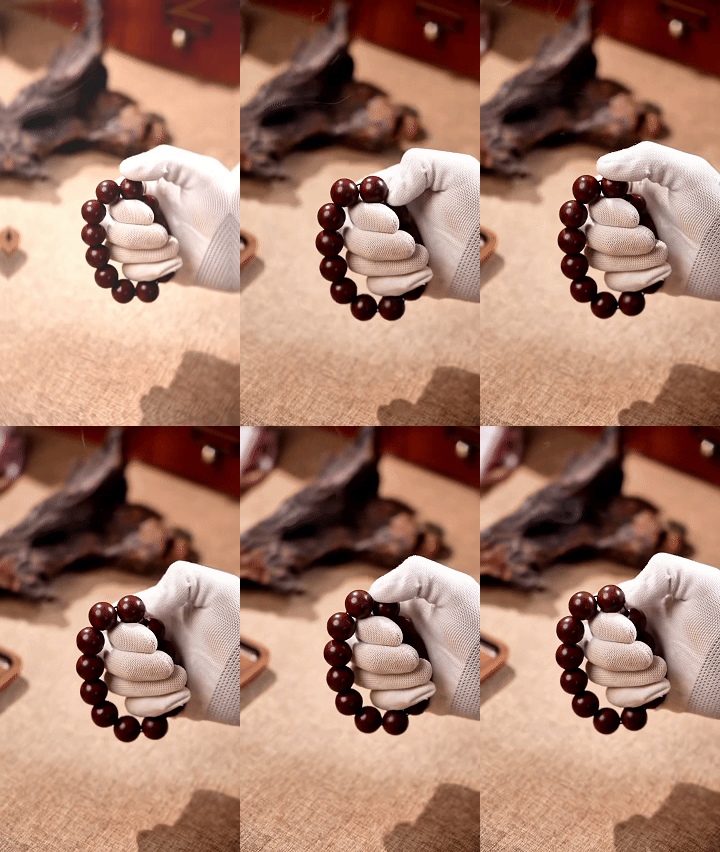
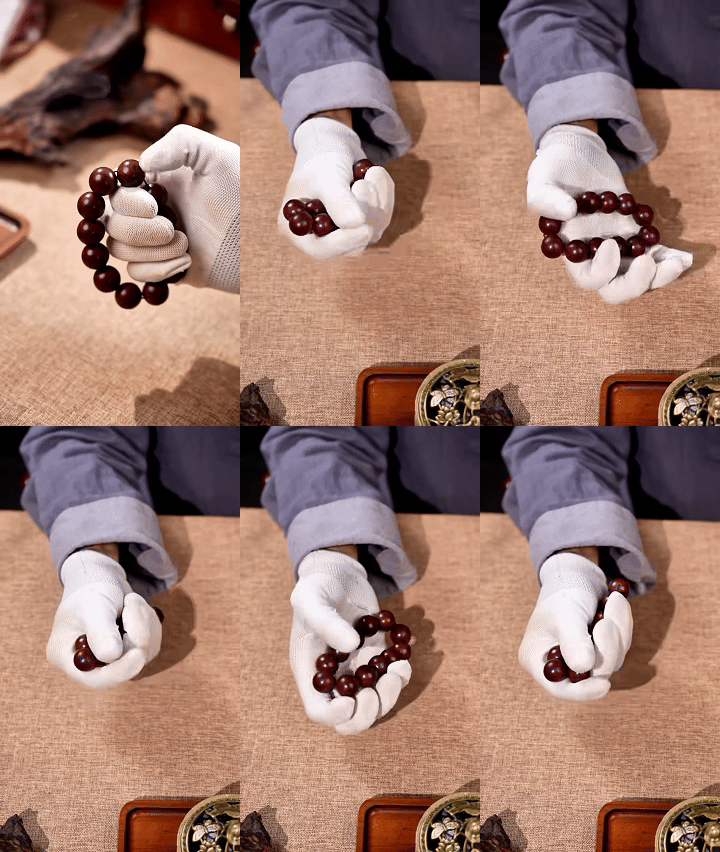
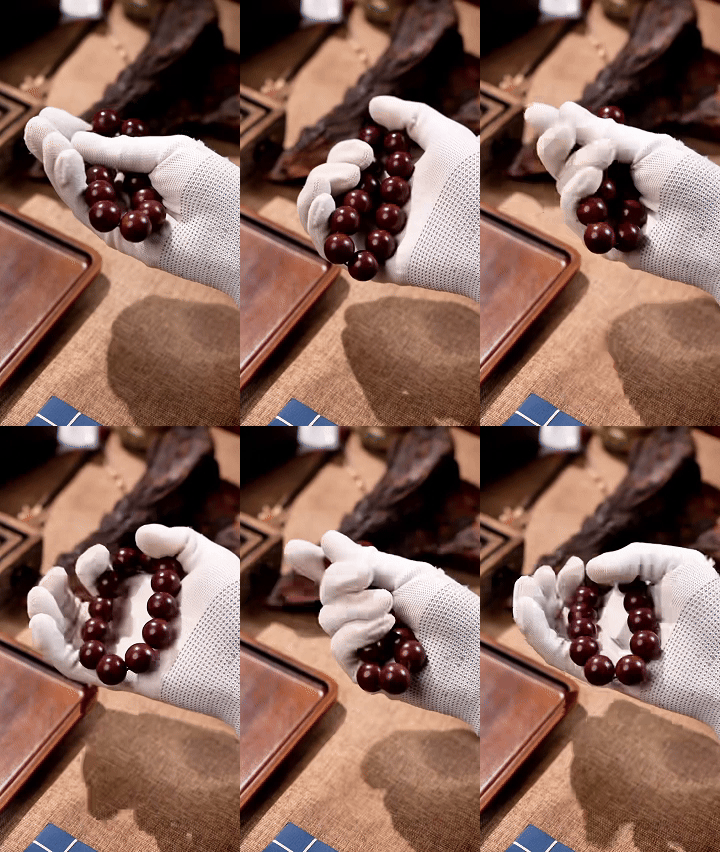
HYLEA Context: 'Pán Wán' is an essential ritual for HYLEA owners. By gently rolling the beads in your palms or between your fingers, you engage in a practice that soothes the spirit and focuses the mind (Jìngxīn). This mindful contact also enhances the warmth (Qi) transferred to the beads, continually awakening their profound aromas and accelerating the beautiful 'Bāo Jiāng' process.
-
-
2. Bāo Jiāng (包浆)
(Pronunciation: /baʊ dʒjæŋ/ "Bow-Jyang")
The Living Patina (The Beauty of Evolution)
'Bāo Jiāng' refers to the unique patina—a natural sheen and deepening of color—that develops on the surface of natural materials through prolonged contact with the human body. In Eastern aesthetics, 'Bāo Jiāng' is highly valued, signifying a deep connection between the object and its owner, and the beautiful passage of time.
-
HYLEA Context: The true beauty of HYLEA lies in its transformation. As you wear and handle (Pán Wán) the beads, they absorb your natural warmth and energy (Qi). Over time, the matte finish will evolve—the color will deepen, and a subtle, elegant sheen will emerge. This is not a flaw, but the celebrated result of the symbiotic loop (Xúnhuán). It is the visual record of your journey, making the bracelet uniquely yours.
-
3.Qi (气)
(Pronunciation: /tʃiː/ "Chee")
The Vital Life Force
In Ancient Eastern Philosophy, 'Qi' is the fundamental energy that flows through all existence. It is the animating force of life, governing your vitality, breath, and spirit. When Qi flows freely, the body and mind are in a state of harmony.
-
HYLEA Context: Our Harmonized Scent Beads are designed to interact with your personal Qi. Activated by your natural body heat, the beads work to harmonize and enhance your energy flow, promoting a sense of balance and well-being.
4. Xúnhuán (循环)
(Pronunciation: /ʃuㄣˊ xwæn/ "Shwin-Hwan")
The Symbiotic Loop
'Xúnhuán' translates to circulation or cycle. It reflects the belief that nature and the human body thrive in a state of continuous, balanced flow.
-
HYLEA Context: 'Xúnhuán' describes the symbiotic loop created when you wear HYLEA. Your body heat (Qi) activates the botanicals, and in turn, their essence merges back with your energy. This continuous exchange cultivates lasting harmony, unlike the fleeting nature of synthetic perfume.
The Alchemy of Connection: How Pán Wán (盘玩) Cultivates Bāo Jiāng (包浆)
The transformation of your HYLEA beads from a raw, matte finish to a lustrous patina (Bāo Jiāng) is not accidental wear and tear. It is a beautiful alchemy driven by your mindful interaction (Pán Wán). Understanding this process reveals the depth of the connection between you and the botanicals.
The Foundation: A Living Material
HYLEA beads are unique because they are 100% natural—composed of compressed, raw botanicals (rare woods, resins, and herbs). We do not seal them with synthetic lacquer. Our beads are porous and "alive," designed to breathe, absorb, and interact with you.
The Process: The Alchemy of Touch When you engage in 'Pán Wán'—gently rolling the beads in your hands—a subtle transformation occurs through three key interactions:
-
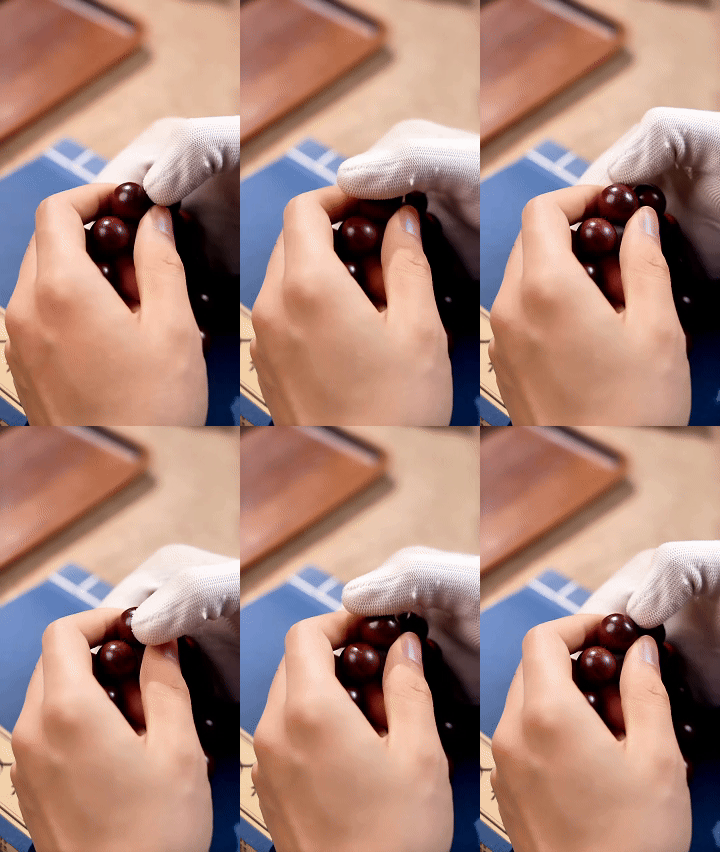
Micro-Polishing: The natural texture of the cloth acts as the finest polishing tool. This gentle, repeated friction gradually smooths the microscopic roughness on the bead's surface, much like time and water smooth a river stone.
-
Activation and Infusion: Your body heat (your Qi) is transferred to the beads. This warmth achieves two things: It encourages the precious natural resins and oils held within the beads to slowly migrate toward the surface, and it allows the porous structure to absorb subtle natural oils. This is the essence of 'Xúnhuán' (循环)—a symbiotic exchange.
-
Setting and Transformation: This unique combination—the internal botanical essence merging with your own—accumulates on the polished surface. Over time, this layer slowly oxidizes and sets (hardens).
The Result: Bāo Jiāng
'Bāo Jiāng' is the culmination of this alchemy. The color of the botanicals deepens and richens from the inside out, and the signature elegant sheen emerges.
This is why the patina is so highly revered. It is the physical manifestation of your time, your energy, and your connection with the beads—a visual history that makes the bracelet uniquely yours.
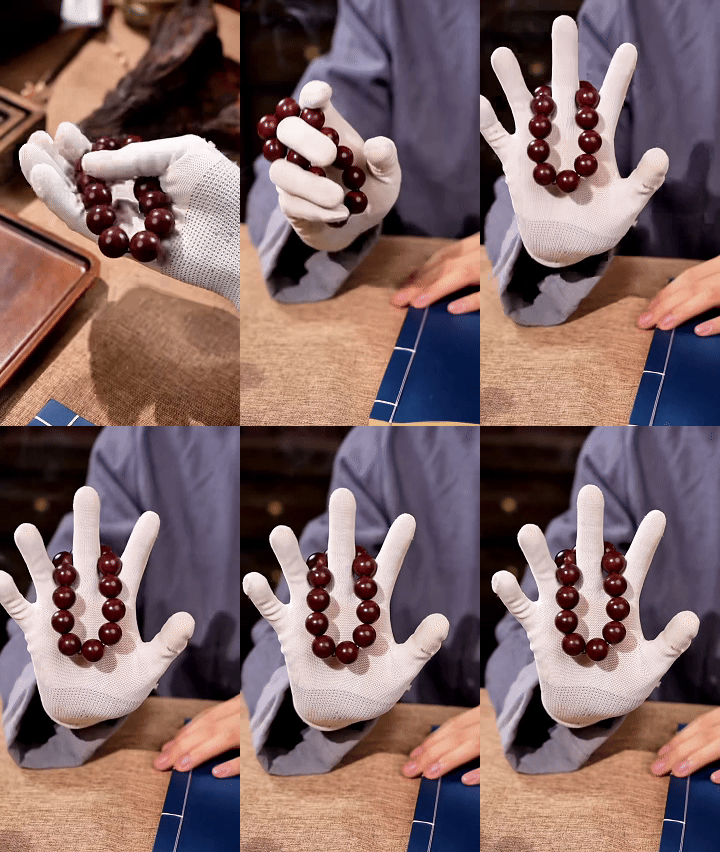
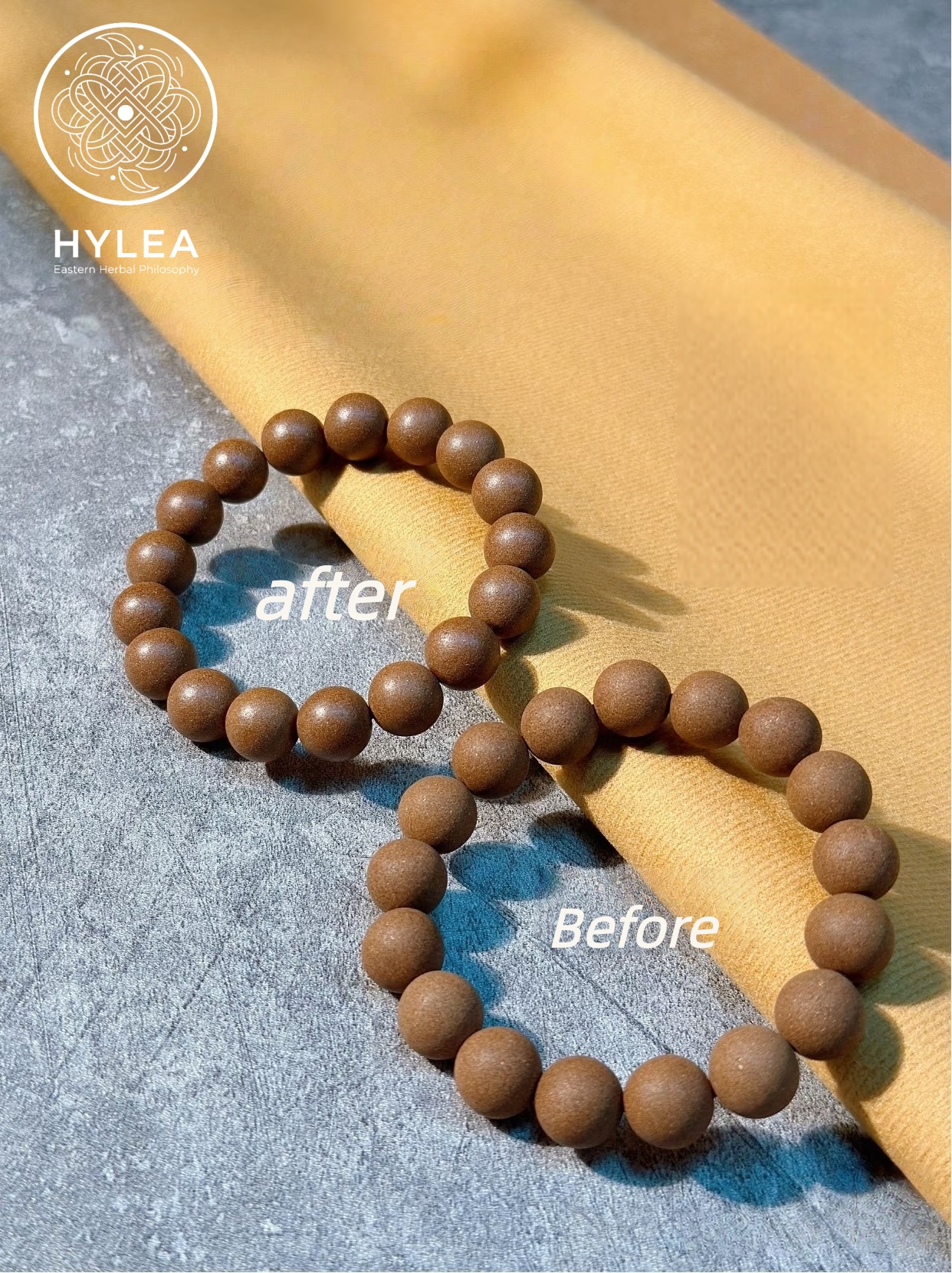
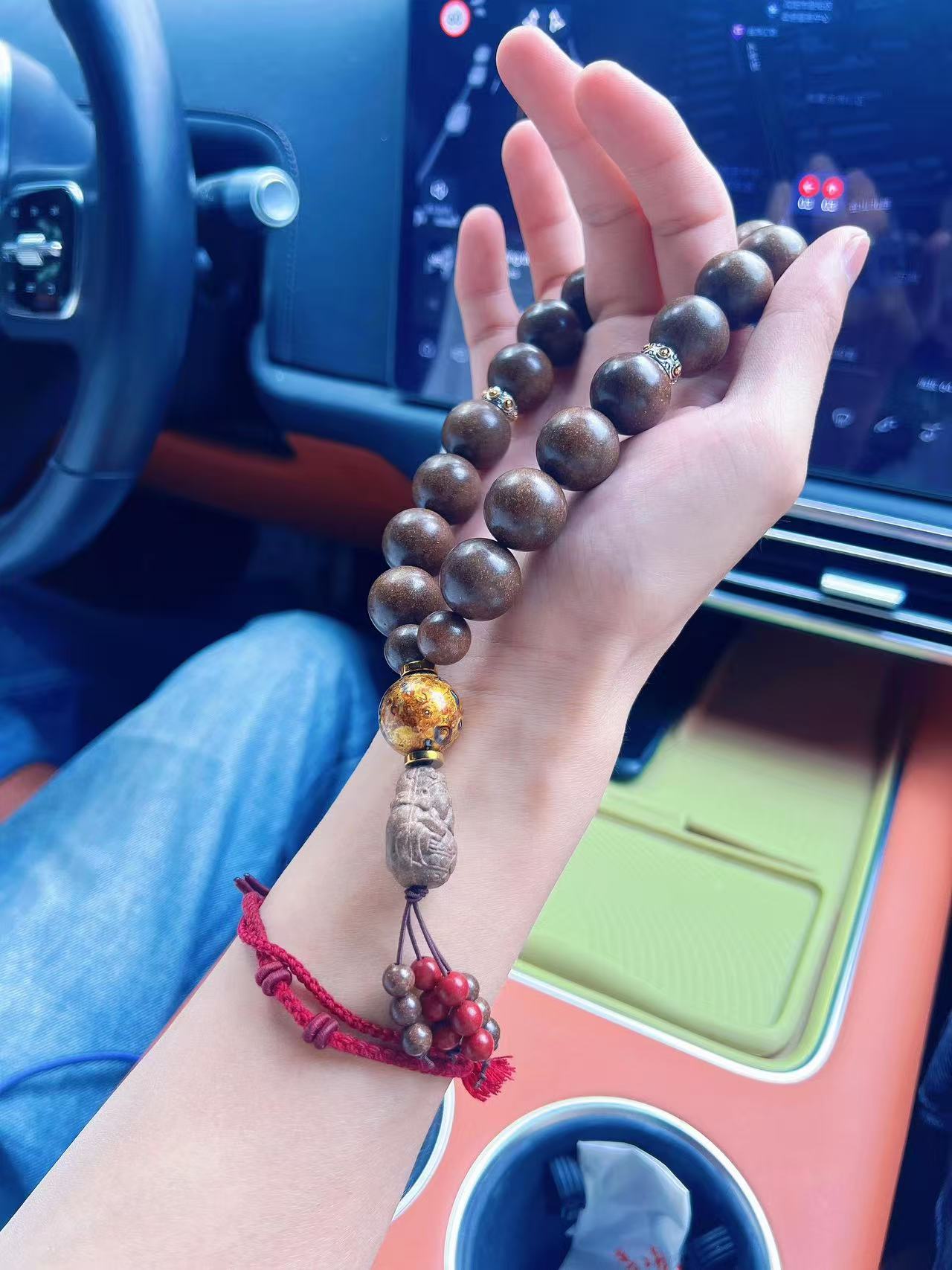
【More styles coming soon!】
Handling Steps (Your Ritual Guide)
1. Initial Acclimatization:
After opening, the aroma may be strong. Store the beads in a cool, well-ventilated place to stabilize the internal aroma. (Note: Avoid direct sunlight or air conditioning to prevent cracking.) Fan them gently to enjoy the scent, but avoid holding them directly against the nose initially to prevent uneven coloring from facial oils.
2. The Polishing Phase:
Gently roll the beads between your thumb and forefinger. Listen to the soft sound of the wood for 30-40 minutes daily. Once a patina (Bāo Jiāng) layer begins to form (indicated by a slight feeling of resistance or "tackiness"), you can proceed to the next stage.
Tip: The feeling of Resistance on the beads indicates that the patina(包浆)layer is forming
Note: Be gentle when handling beads, and avoid applying excessive force. Avoid prolonged handling, which can remove the patina(包浆) from the beads. Be sure to carefully consider the gaps between the beads as well!
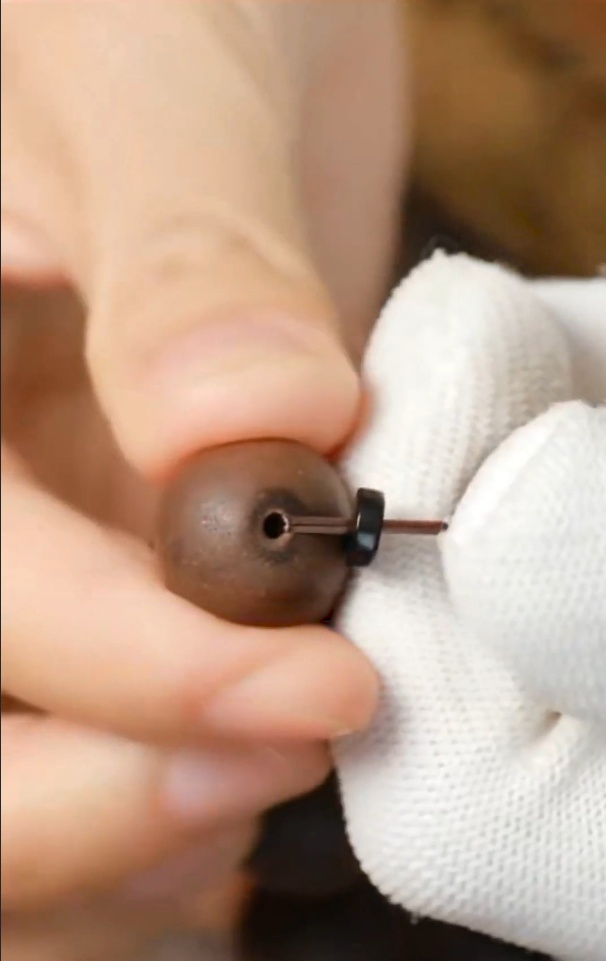
3. After 13-18 days, package and wear them.
4. A small amount of powdering may initially occur on the surface of the beads. This is normal and will generally fade after a week.
5. Third stage of care: Avoid contact with water, oil, and sweat. Remove the beads when washing hands, bathing, or soaking in hot springs. Contact with water or sweat may cause discoloration of the beads.
6. When not in use, store the beads individually in a small pouch (if you have multiple beads and bracelets).
7. To develop a patina(包浆): Dry, cool, and hard beads are more likely to develop a protective layer. The surface will become oily and smooth.
8. If the patina(包浆) is difficult to develop, try placing the beads in a sealed container with desiccant and refrigerating them for a day or two before handling them.
9. Once the patina(包浆) develops, the beads are ready to wear.
10. Seasonal Care Tips: In hot and humid weather, the outer layer of the beads is easily contaminated by sweat and dust, so you need to handle them more frequently to prevent them from changing color. Wear them when you are not sweating. Follow the principle of "wear for a while, handle for a while, and then let them sit for a while" to promote the development of the patina(包浆). In hot weather, wearing gloves when handling the beads can help improve the color of the beads.
11. Store the beads in a cool, dry place with a suitable amount of desiccant to prevent moisture and mold. If the beads have uneven color, this may be due to inconsistent patina(包浆) or accidental water exposure. Continue to play with them normally and the color will gradually return to a uniform state.
Please remember:
-
Always wear gloves during the initial Pán Wán stages.
-
Avoid water and chemicals. If contact occurs, wipe dry and rest in a cool place for 3 days.
-
Be patient. This is a cyclical process of cultivation.
If the initial powder flakes off, it's normal. Avoid excessive force or prolonged playing“盘玩 (Pán Wán)” (playing with the jade).
Remember, avoid impatience. This is a "cyclical" process of cultivation, from the outside in, and then from the inside out. Over time, the beautiful patina develops.
(Note: If your hands sweat easily, always wear gloves when handling the jade, regardless of whether the patina(包浆) has formed.)
The path to patina for HYLEA beads is a unique and meditative journey. Unlike oily wood beads that are nurtured by their own resins, our herbal beads, crafted from precious powders, achieve their lustrous patina through a gentle act of polishing and purification.
The gloves or storage bags we provide for you:Your Polishing Tool
We provide complimentary cotton polishing gloves and leather storage pouches. These are essential tools with two key functions:
To Polish: The gentle friction from the cloth meticulously compacts and smooths the surface of the beads, creating the rich, glassy luster known as patina (包浆).
To Protect: It acts as a crucial barrier, protecting the porous beads from hand oils and sweat, which could otherwise alter their pure, intended fragrance.
Embrace this mindful practice. As you polish, you are not just creating a beautiful object; you are deepening your connection to an ancient art form.
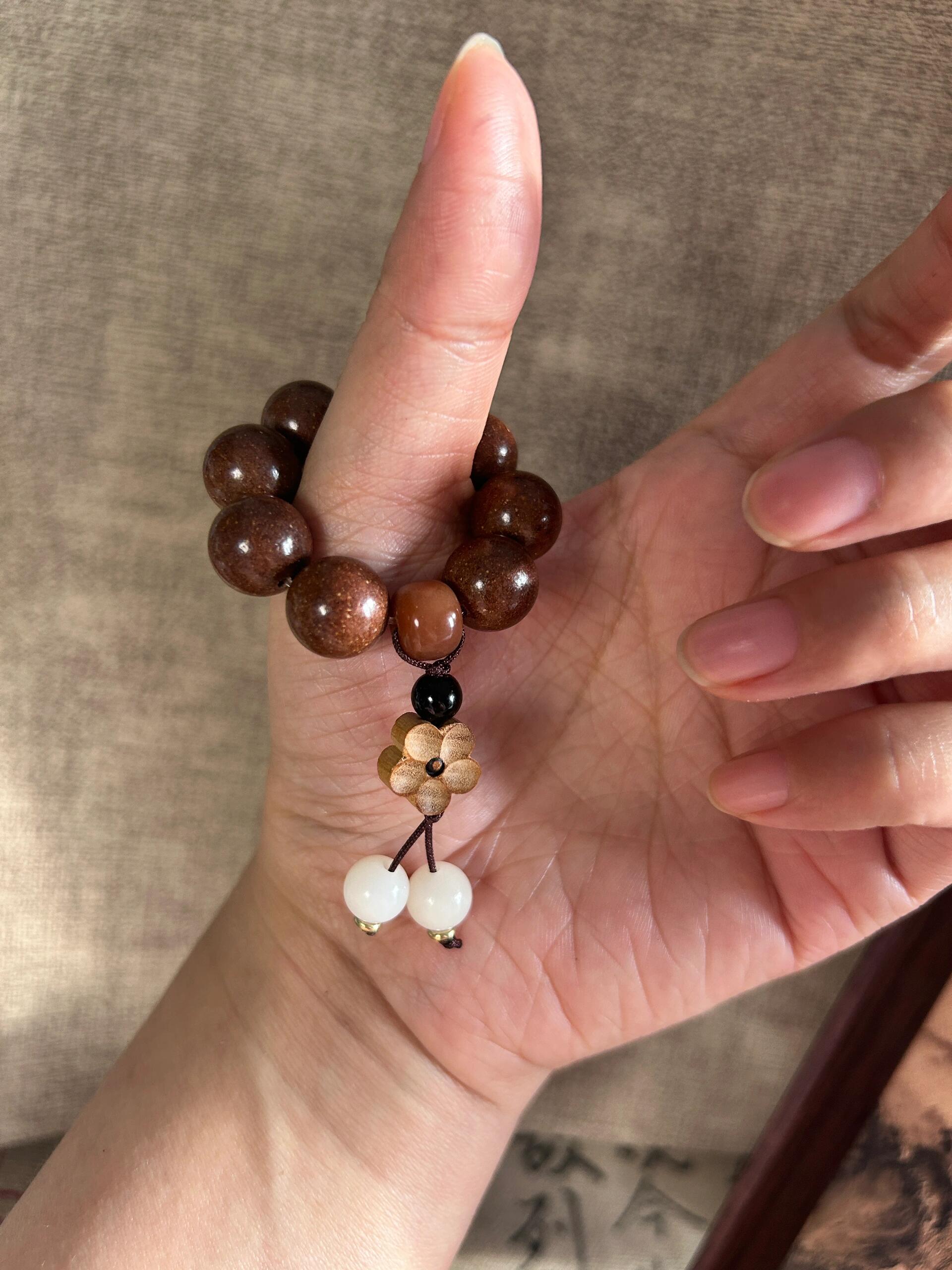
The history of polishing and appreciating patina(包浆) can be traced back to ancient literati, who played盘玩 (Pán Wán)” with objects (such as walnuts) to pursue the natural luster created by the patina(包浆). This custom originated in the Han and Sui dynasties, became popular during the Tang and Song dynasties, and reached its peak during the Ming and Qing dynasties, becoming a vital part of cultural appreciation. The term "patina" (包浆)itself refers to the natural luster formed on objects due to long-term oxidation. It can be found on a variety of items, including ceramics, wood, jade, bronze, and ivory carvings.
Early Origins and Evolution
- Origins: The practice of polishing and appreciating patina dates back to the Han and Sui dynasties.
- Popularity and Prevalence: It became popular during the Tang and Song dynasties and reached its peak during the Ming and Qing dynasties.
- Palace Practice: During the Qing Dynasty, the practice of appreciating walnuts was particularly prevalent within the imperial court, with Emperor Qianlong commemorating the practice in a poem.
- The Nature and Value of Patina(包浆)
- Essence: Patina(包浆), a term used in the antiques industry, refers to the naturally lustrous layer formed on an object's surface after prolonged oxidation.
- Value: It is more than just a change in the object's appearance; it is also a mark left behind by time, representing the connoisseur's long-term investment and emotional attachment. Modern Significance: While the variety of modern collectibles has increased (such as Buddhist beads), the core pursuit of "polishing to a patina" remains unchanged.
- The Inheritance of Polishing Techniques
- Traditional Methods: Walnut polishing typically involves "kneading" or "holding" with one hand, while also using the other hand for "wiping."
- Core Goal: The core purpose of polishing is to engage multiple senses, including visual changes, tactile involvement, olfactory sensations that provide comfort, and ultimately to create a beautiful, warm, and glossy appearance. It is a practice of engaging the senses rather than just physical manipulation.
- If you've encountered the following question: Why do some bloggers apply patina(包浆) with bare hands while we need to wear gloves? Here's the authoritative explanation for you.
- 1. The Logic Behind Handling Wooden Bracelets
Core Principle: Stimulate and solidify the wood's natural oils. - Material Properties: Many precious woods (such as small-leaf rosewood and Hainan yellow rosewood) are rich in natural oils. The goal of handling is to allow these oils to slowly “rise” from within the wood under the influence of body heat and gentle friction. Once exposed to air on the bead surface, they oxidize and solidify, forming a translucent, stable protective layer. This is the “patina”(包浆) of wooden bracelets.
- Why not use gloves? Cotton gloves absorb oils. If you handle an oil-releasing wooden bracelet with gloves, they will act like oil-absorbing paper, drawing out the wood's precious oils. This causes the bracelet to become increasingly dry, lose its luster, and deteriorate.
- Why not use sweaty hands? Excessive sweat and grime seep into the wood's pores, causing the beads to darken and lose their translucency (becoming increasingly dull and dirty).
- Conclusion: For oily wood beads, the core principle is “oil nourishment,” and gloves are its natural enemy.
- 2. Handling Principles for Incense Beads (Gloves Required)
Core Principle: Forming a dense surface layer through physical polishing and compression. - Material Characteristics: Incense beads are made by mixing various herbal and aromatic powders with binders (such as water), then compressed and air-dried. Their structure is porous and powdery, lacking the ability to continuously secrete oils like oily woods.
- Why Gloves Are Essential?
- Avoid Contamination: Due to their porous nature, incense beads rapidly absorb sweat, oils, and dirt from hands. This not only clogs pores and dirties the beads but severely contaminates their pure fragrance, causing “flavor transfer.”
- Physical Polishing: Clean, fine-weave cotton gloves function as a “polishing cloth.” Consistent, gentle friction smooths microscopic particles on the bead's surface and further compacts the surface powder, making it increasingly smooth and dense. This ultimately creates a “glazed” luster—the patina of incense beads.
- Preventing Powder Shedding: During the initial handling phase, powder residue may appear on the incense bead's surface. Gloves effectively manage this residue while accelerating the surface's solidification.
- Conclusion: For powder-pressed incense beads, the core principles are “polishing” and “contamination prevention.” Gloves are essential ritual tools in this process.
Explore us: [Get your tactile meditation tools]