
The Cultural Encyclopedia of The Resonant Vessel
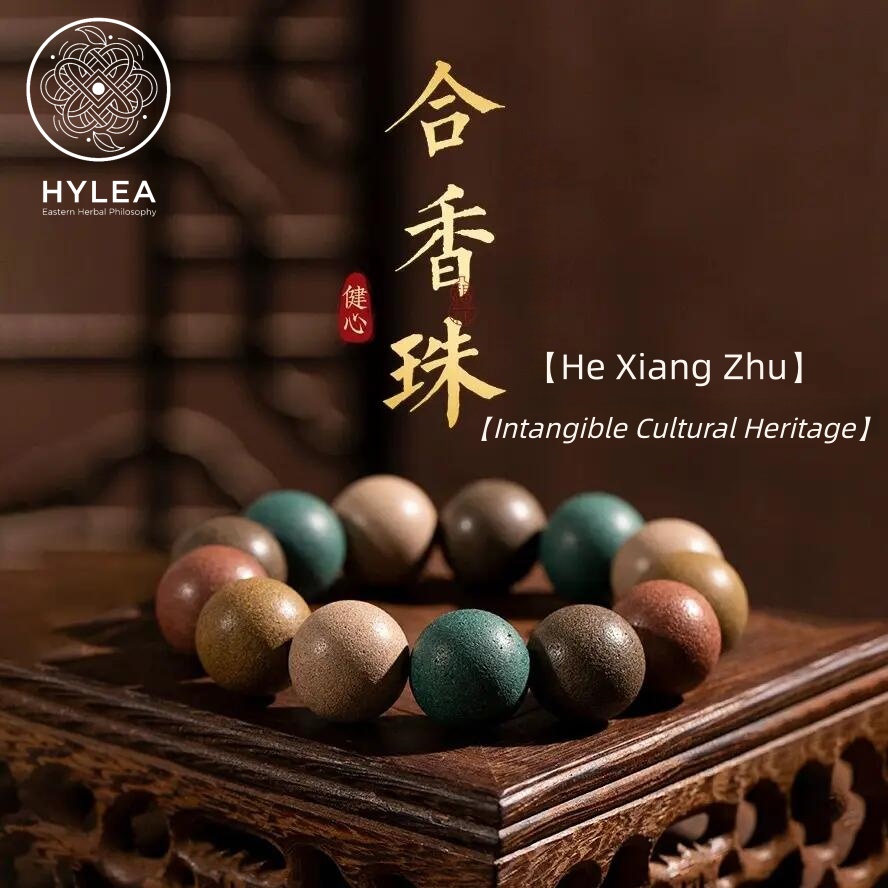
Introduction: A Cultural Treasure Beyond Adornment
HYLEA Glossary: Understanding the Essence
(introduction) Welcome to the world of The Resonant Vessel –
Embark on a journey through time.The Resonant Vessel, born ~2,000 years ago on the Han Dynasty's Silk Road,. Their evolution saw them embraced by Daoist practitioners seeking stillness, documented meticulously in Song Dynasty imperial records like the 《History of the Song Dynasty》 as court treasures, and noted in Ming Dynasty palace archives (《明宫史》) for gracing royalty with unique, natural scents.
Beyond Perfume. A Philosophy You Wear. "The Resonant Vessel or Harmonized Scent Beads, represents a profound convergence of ancient medicine, philosophy, and craftsmanship. Recognized as a treasured element of China’s Intangible Cultural Heritage (非物质文化遗产), it is far more than an accessory. It is an ancient technology for holistic well-being, designed to harmonize your inner state by reflecting the balance of the cosmos itself.
I. A Journey Through Time: The History of The Resonant Vessel
The evolution of The Resonant Vessel mirrors the ebb and flow of Chinese incense culture and societal aesthetics.
-
Han Dynasty (~200 BCE - 220 CE) - Genesis on the Silk Road & Restorative Roots: Approximately two thousand years ago, with the opening of the Silk Road, the trade of spices between East and West flourished. Caravans traversing the long routes began grinding various fragrant herbs—known for clearing the air and awakening the senses—into powders, forming rudimentary beads to wear. These served as both status adornments and essential tools for safeguarding well-being in harsh environments. Artifacts like scented sachets unearthed from the Mawangdui Tombs attest to the importance placed on fragrant herbs during this era
-
Wei, Jin, Southern & Northern Dynasties - Daoist Embrace & Spiritual Vessel: This era saw the rise of Daoism. Incense, particularly types known for calming the mind (Jìngxīn), became a vital medium for Daoist practitioners to communicate with the cosmos and aid in meditation. The portability of The Resonant Vessel led to their adoption by scholars seeking spiritual transcendence.
-
Tang Dynasty (~618 - 907 CE) - Flourishing Refinement & Eastward Transmission: During the prosperous Tang Dynasty, incense culture reached unprecedented heights. The formulas (Xiāng Fāng) became more sophisticated. They were popular among the imperial court and became elegant objects of literati life. The journey of the eminent monk Jianzhen to Japan introduced these advanced incense-making techniques, deeply influencing Japanese Kōdō (The Way of Incense).
-
Song Dynasty (~960 - 1279 CE) - The Golden Age & Literati Elegance: The Song Dynasty marked the zenith of Chinese incense culture. Incense appreciation was considered one of the "Four Arts of the Literati," alongside tea ceremony, flower arrangement, and painting appreciation, essential practices for self-cultivation. The creation and use of The Resonant Vessel peaked. Imperial records like the History of the Song Dynasty (《宋史·舆服志》) detailed the precious ingredients used in court-made beads. Poems and notes by scholars frequently mentioned them. The Resonant Vessel of this era utilized rare materials (Agarwood, Sandalwood, Borneol, Musk), featured exquisite Xiāng Fāng, and involved complex craftsmanship, signifying personal taste and aesthetic refinement.
-
Ming & Qing Dynasties (~1368 - 1912 CE) - Imperial Legacy & Daily Refinement: The Resonant Vessel continued to circulate within the imperial court and upper echelons of society. The History of the Ming Palace (《明宫史》) described an Imperial Consort famed for her unique natural fragrance, attributed to her The Resonant Vessel. The Qing court, particularly under Empress Dowager Cixi, was known for its elaborate use of aromatics for wellness and ambiance. As refined adornments and providers of intimate olfactory experiences, The Resonant Vessel became integrated into the fabric of aristocratic daily life.
-
Modern Revival: Impacted by modern synthetic perfumery and societal changes, the traditional craft of The Resonant Vessel faced decline. However, a renewed interest in cultural heritage, natural living, and holistic well-being has recently sparked a revival of this intangible cultural treasure. HYLEA was born from this context, dedicated to reviving and transmitting this ancient scented wisdom with modern aesthetics and rigorous respect for tradition.
-
The Philosophy of Balance
The Cosmos Within (内在的宇宙). The foundation of He Xiang Zhu lies in the ancient Daoist understanding of the universe. Daoism observes that all existence is governed by the dynamic balance of opposing forces (Yin-Yang 阴阳) and the flow of vital energy (Qi 气).
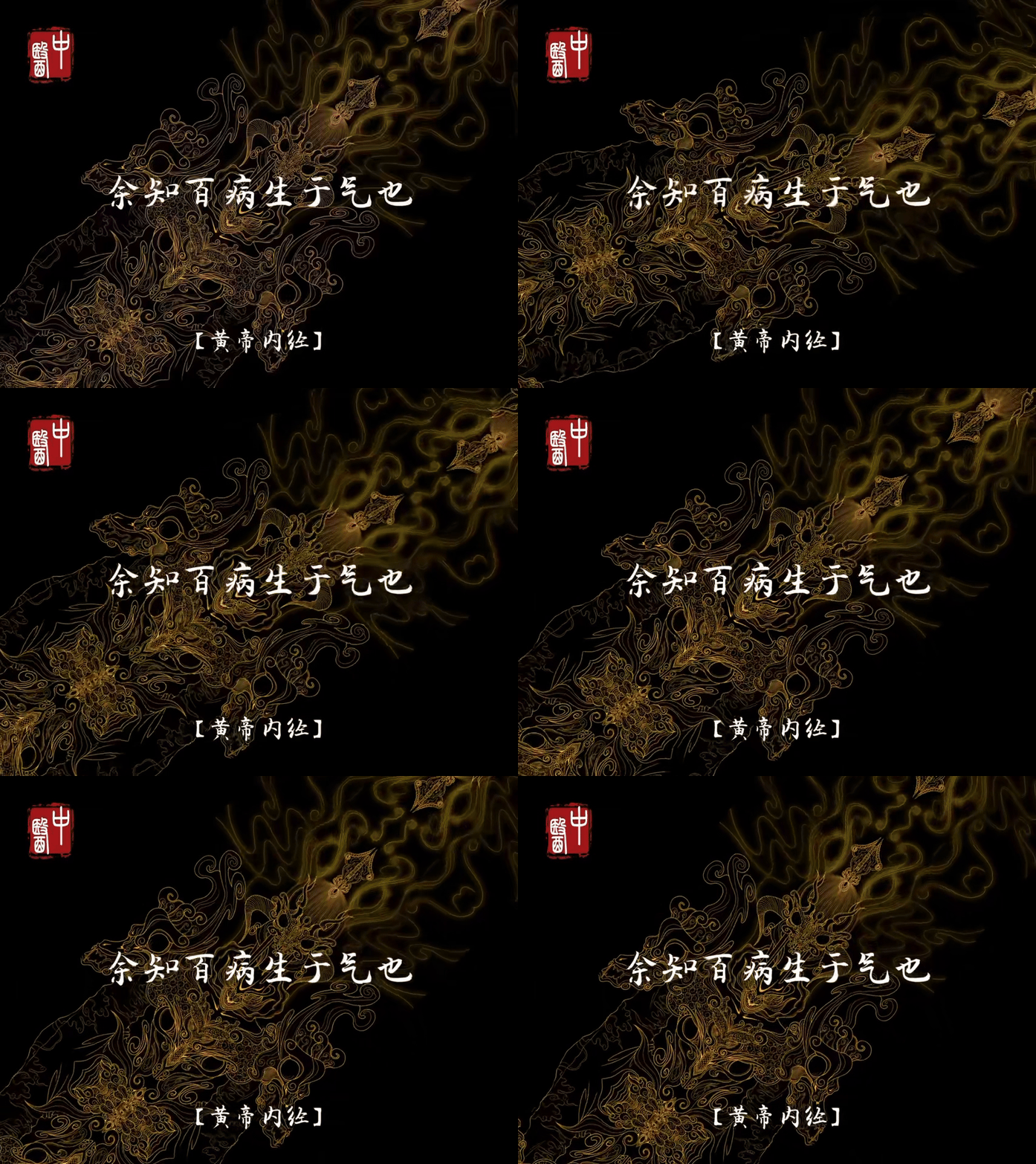
TAncient Eastern Herbal Tradition, deeply intertwined with Daoism, views the human body as a microcosm of this universe—a concept known as 'Tiān Rén Hé Yī' (天人合一 - Harmony between Humanity and the Universe). As emphasized in the foundational text, the Huangdi Neijing (《黄帝内经》), well-being is achieved when our internal environment mirrors the harmony of nature.
The Roots of Scent & Wisdom (香药同源).
In ancient Eastern philosophy , aromatics are not merely pleasant scents; they are profound mediums for harmonization . This is the principle of "Xiang Yao Tong Yuan"—the belief that Scent and Herbal Wisdom share the same root .
Unlike physical sustenance, aromas are believed to resonate deeply , interacting directly with the energy pathways (Meridians) and the 'Shen' (神 - the spirit/mind). He Xiang Zhu was developed as a sophisticated method to carry this harmonizing energy directly on the body.
II. Eastern Philosophy: The Wisdom of Daoism & TCM
The allure of The Resonant Vessel extends beyond history into the profound wisdom of Eastern philosophy and medicine.
-
Qi (气) - The Vital Force: Qi is the cornerstone of Eastern thought, the fundamental energy animating life. It flows within us through pathways called Meridians (经络). Smooth, harmonious Qi flow is the basis of vitality. The natural herbs within He Xiang Zhu possess specific energetic properties that interact with the body's Qi field via scent, supporting its smooth circulation.
-
Yin-Yang & Five Elements: Traditional herbal practices utilize herbs based on and flavor to restore balance. Similarly, traditional Xiāng Fāng blend herbs to harmonize with individual constitutions (e.g., using warming Sandalwood to balance coolness, or herbs entering the Heart meridian like Borneol to settle the spirit).
-
Energetics of Key Ingredients:
-
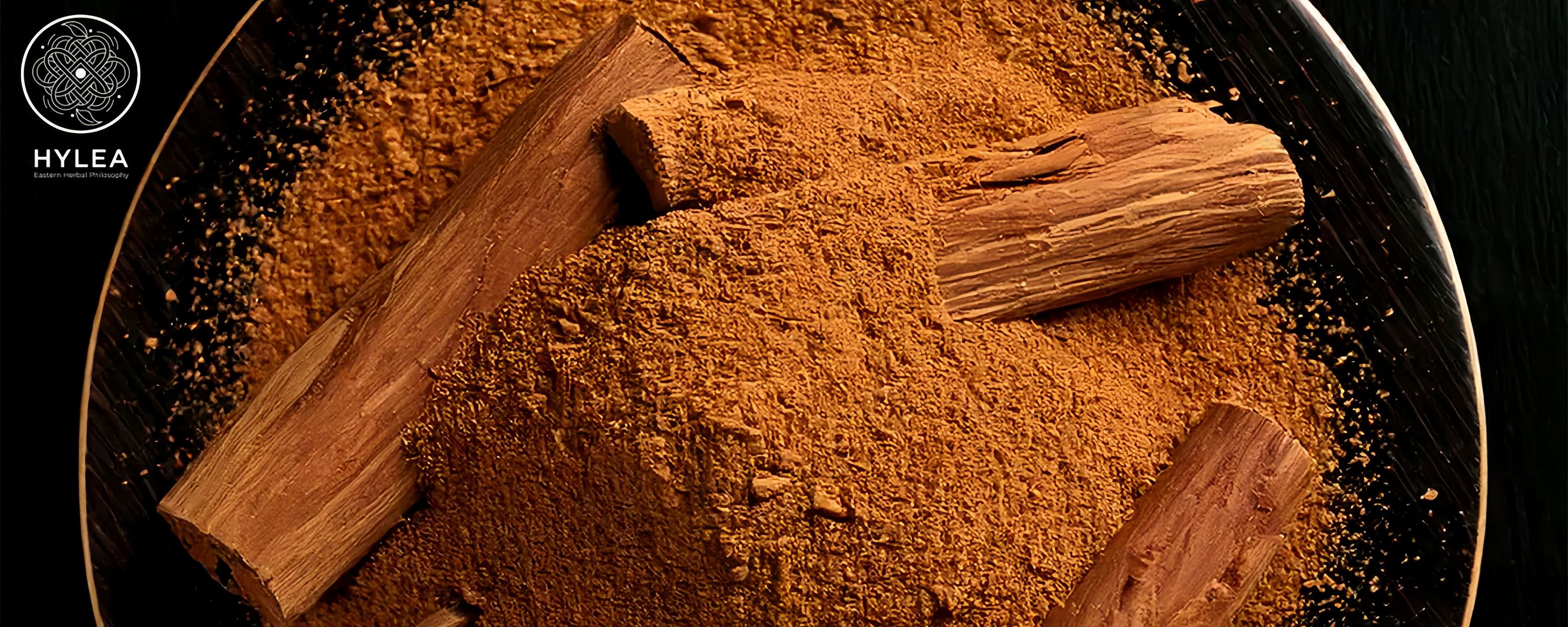
Sandalwood (檀香): Considered warming, entering the Spleen and Lung energy pathways. Traditionally used to center the self and soothe the mind.
-
-
-
Agarwood (沉香): The "King of Incense." Warming and grounding. Believed to help energy descend and warm the core. Its complex scent purifies the mind.
-
Borneol (龙脑/冰片): Borneol (龙脑): Slightly cooling, entering the Heart pathway. Known for its ability to open the senses and clear the mind.
-
Musk (麝香 - Note: Ethical substitutes used): Warming. Potent for activating circulation and uplifting the aura.
-
The Art of Formulation
The Alchemy of "Hé" (合). The character "Hé" (合) means to harmonize or to blend with precision. It is not simple mixing; it is alchemy. The creation of The Resonant Vessel relies on complex, often secret formulas known as "Xiang Fang" (香方), passed down through generations of masters.
The Art of Formulation: "Jun-Chen-Zuo-Shi" These formulas follow a sophisticated structure inspired by the imperial court:
The Emperor (君): The principal ingredient defining the core purpose.
The Minister (臣): Enhances the Emperor.
The Assistant (佐): Balances the formula.
The Envoy (使): Guides the blend to the correct energy pathways. This meticulous structure ensures the final aroma is energetically balanced.
This meticulous structure ensures the final aroma is not only profound and beautiful but also energetically balanced and enduring.
III. The Art of the Formula (Xiāng Fāng - 香方): Olfactory Art Through Millennia
The soul of The Resonant Vessel lies within its Xiāng Fāng.
-
The Art of Blending: Traditional formulas follow principles akin to TCM herbology's hierarchy (Emperor, Minister, Assistant, Envoy - 君臣佐使), balancing ingredients to enhance primary effects, mitigate harshness, and harmonize the overall aroma. A masterful Xiāng Fāng yields a scent that is balanced, layered, and effective.
-
Creating Atmosphere (意境): Ancient formulas were often tied to specific cultural contexts, seasons, or purposes – scents for scholarly contemplation, for Zen meditation, or for auspicious courtly occasions. These Xiāng Fāng are carriers of culture and emotion.
-
HYLEA's Heritage & Innovation: HYLEA deeply researches ancient incense manuals. Respecting tradition while considering modern olfactory preferences and wellness needs, we have carefully formulated 12 core Xiāng Fāng designed to offer an authentic yet relevant scented experience.
A Silk Road Legacy
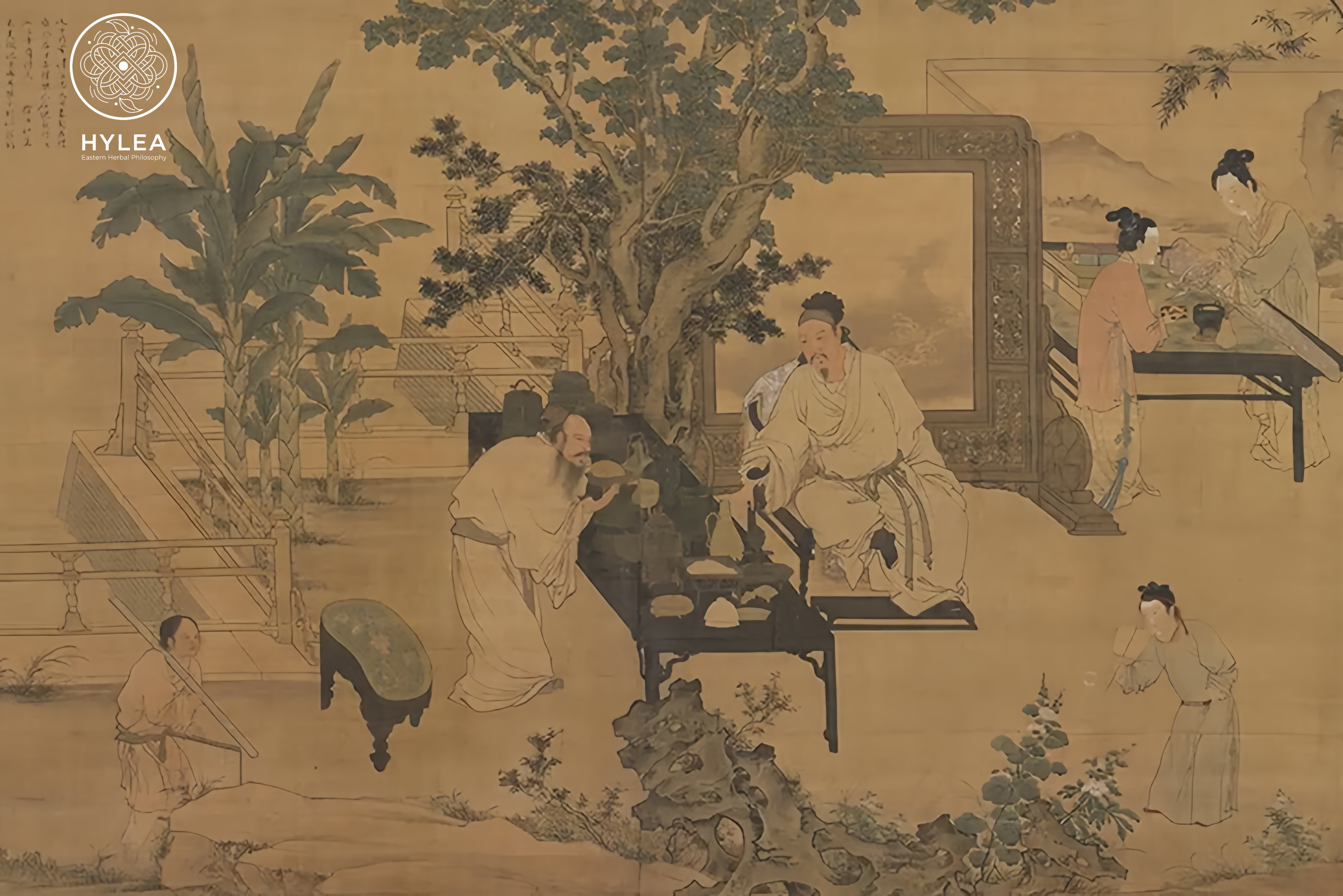
Treasures Across Continents. While the tradition is rooted in Chinese philosophy, the evolution of The Resonant Vessel is intrinsically linked to the vibrant cultural and material exchanges of the ancient Silk Road.
This network allowed precious aromatics from across the known world—Frankincense from the Middle East, Sandalwood from India, Ambergris from the oceans, and Agarwood from Southeast Asia—to reach the heart of China.
The Scent of Nobility. Master artisans synthesized these global treasures using local wisdom. Recorded in historical texts like the Xiang Pu (《香谱》) and treasured by the Imperial Courts of the Tang and Song Dynasties, these beads were more than luxury items. They were essential companions for meditation, spiritual protection, and maintaining balance ('Yǎngshēng' 养生 - cultivating health) amidst the complexities of life and travel.
IV. The Resonant Vessel & You: The HYLEA Connection
Understanding the profound cultural roots of The Resonant Vessel illuminates the unique value HYLEA offers.
-
Experience Beyond Fragrance: HYLEA provides not the fleeting, masking effect of perfume, but a journey of Inner Nourishment (内养). Through Qi Activation (body heat), the natural herbal energies engage in a Symbiotic Cycle (Xúnhuán) with your body, gently harmonizing your inner state and cultivating a subtle, enduring personal aura.
-
A Vessel for Mindfulness: The ritual of Pán Wán (盘玩) is how you connect with your Resonant Vessel. It invites you to slow down, focusing on the tactile sensation and evolving aroma, cultivating inner stillness while developing the outer beauty of the Bāo Jiāng (包浆) through time and patience.
-
A Talisman of Heritage: Wearing HYLEA is more than choosing an accessory; it's embracing a life philosophy, a connection to millennia of Eastern wisdom. You wear a piece of history, a mark of craftsmanship, and a quiet power rooted in nature's tranquility.
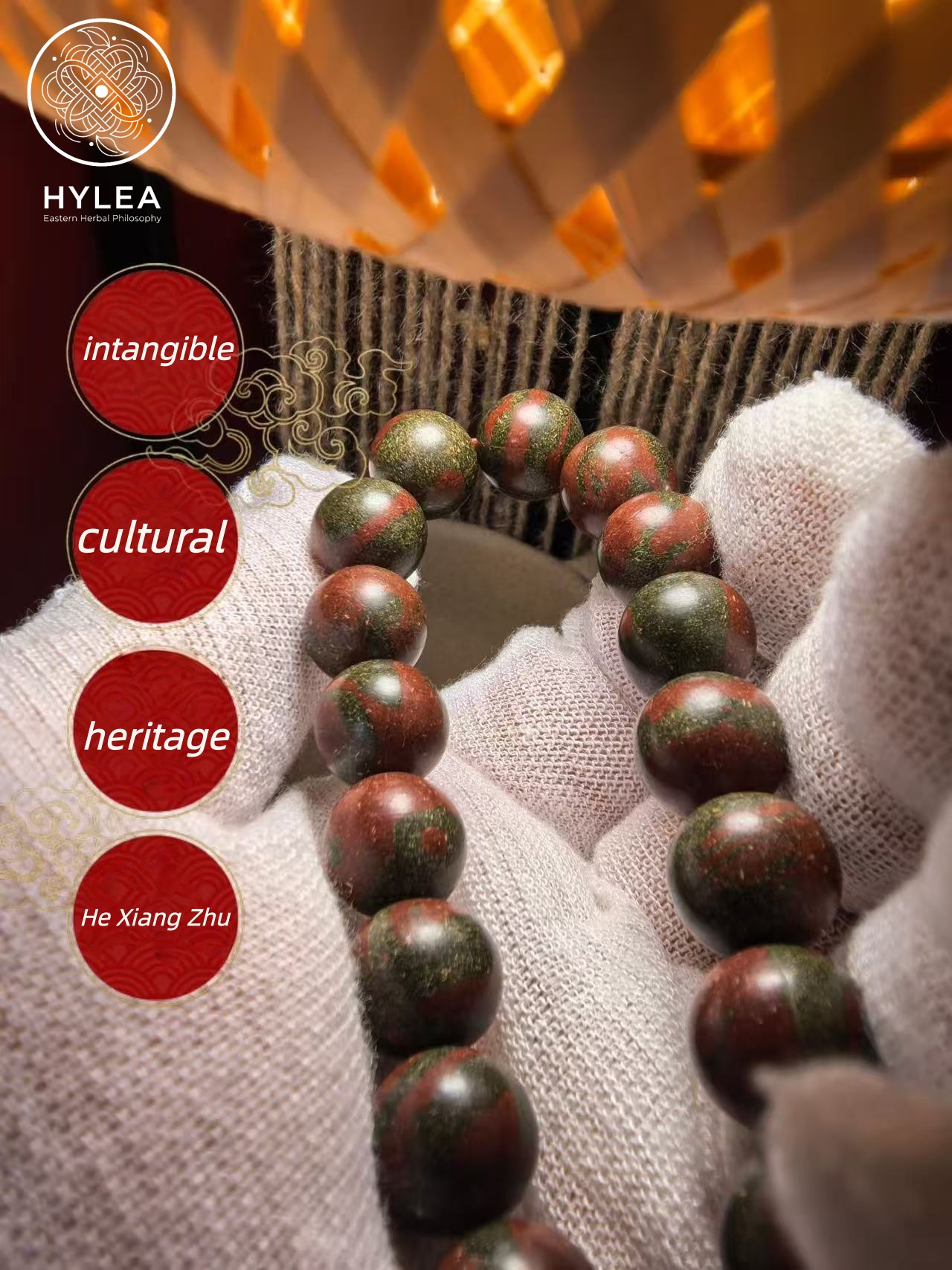
Look closely, and you'll notice the subtle magic woven into each The Resonant Vessel. Unlike the uniform appearance of synthetic materials, the surface reveals a universe in miniature: tiny, shimmering particles and fine fibers – the visible traces of the precious ground botanicals themselves. Caught in the light, they impart a gentle, lively sparkle (灵动, Líng Dòng), a testament to the bead's pure, natural origins and the authentic, handcrafted process. This understated elegance speaks not of ostentation, but of the quiet beauty inherent in nature itself.
Conclusion: Begin Your Scented Journey
Each small The Resonant Vessel bead encapsulates millennia of time, nature's gifts, and artisanal dedication. As contemporary custodians of this intangible cultural heritage, HYLEA is honored to invite you to explore its profound charm. May this ancient wisdom from the East bring tranquility, balance, and authentic fragrance to your modern life.